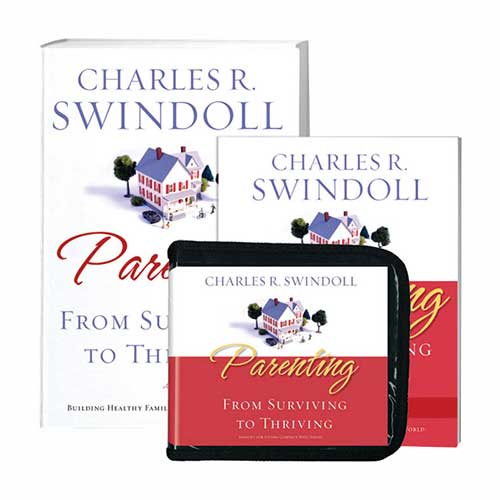

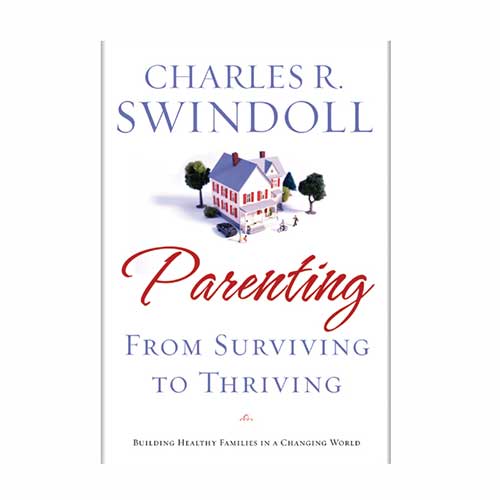

Series Details
Diapers and dolls . . . pimples and puberty . . . homework and housework . . . toddlers and teenagers . . . HELP! How can parents survive?
Author, teacher, parent (and grandparent!), Chuck Swindoll, guides you through the stormy waters of the parenting years by examining practical, proven principles from the Word of God—forged in the crucible of Chuck’s personal experience. You can do more than simply survive as parents—you can thrive!
Parenting is often described as the hardest job you’ll ever love. In this series, Pastor Chuck Swindoll moves past the “survival mode” of just getting through the day and offers a biblical vision for helping children thrive. By focusing on the unique “bent” of each child and the essential role of parental character, these messages provide practical wisdom for building a home defined by grace rather than constant friction.
1. An Overview of Parenting (Selected Scriptures)
- Overview: Lays the foundation for the series by acknowledging the daunting nature of parenting. Chuck emphasizes that children are a gift from God, not a burden to be managed, and that our goal is to prepare them for a life of independence and faith.
- Key Fact: Effective parenting requires a shift from controlling a child’s behavior to influencing their heart.
- Scripture: Psalm 127:3–5 – Children are described as “arrows” in the hand of a warrior, intended to be shaped and eventually released toward a target.
2. The Gifts of the Parent (Selected Scriptures)
- Overview: Focuses on what parents bring to the relationship. It’s not just about providing food and shelter, but providing the “gifts” of time, consistent discipline, and unconditional love.
- Key Fact: The most powerful tool a parent possesses is their own example; children are more likely to do what we do than what we say.
- Scripture: Proverbs 20:7 – “A righteous man who walks in his integrity—How blessed are his sons after him.”
3. Understanding the Child’s “Bent” (Proverbs 22:6)
- Overview: A deep dive into one of the most famous—and often misunderstood—verses on parenting. Chuck explains that “training up a child in the way he should go” means discovering and nurturing their God-given temperament and talents.
- Key Fact: Every child has a unique “bent” (natural inclination); parenting is the art of adapting your style to fit the child’s design rather than forcing them into a pre-set mold.
- Scripture: Proverbs 22:6 – “Train up a child in the way he should go [according to his unique bent], even when he is old he will not depart from it.”
4. The Priority of the Home (Selected Scriptures)
- Overview: Discusses the home as the primary “classroom” for spiritual and emotional development. It challenges parents to protect their family time from the encroachment of an over-busy culture.
- Key Fact: Values are “caught” more than they are “taught” through the daily rhythms of home life.
- Scripture: Deuteronomy 6:6–7 – The command to teach God’s words diligently “when you sit in your house and when you walk by the way and when you lie down and when you rise up.”
5. Disciplining with Grace (Hebrews 12:5–11)
- Overview: Addresses the difficult balance between firm boundaries and a heart of grace. This message distinguishes between “punishment” (inflicting pain for the past) and “discipline” (training for the future).
- Key Fact: True biblical discipline is always rooted in love and is designed to yield the “peaceful fruit of righteousness.”
- Scripture: Hebrews 12:6 – “For those whom the Lord loves He disciplines.”
Common Questions: Parenting: From Surviving to Thriving
1. Does Proverbs 22:6 guarantee my child will never wander from the faith? In “Understanding the Child’s Bent,” Pastor Chuck clarifies that this verse is a “proverb,” not a “promise.” It is a general principle of life. While it doesn’t remove a child’s free will, it teaches that a child trained according to their natural, God-given design is far more likely to remain on that path throughout their life.
2. What is the difference between “shaping” a child and “controlling” a child? Shaping involves recognizing the child’s unique personality and guiding them toward maturity within that design. Controlling often involves trying to make the child a “mini-me” or forcing them to fulfill the parent’s unreached dreams. As the series notes, we are to be the “bow” that launches the “arrow,” not the target itself.
3. How do I discipline a child without crushing their spirit? As discussed in “Disciplining with Grace,” the key is the motive. Discipline should be done with a calm spirit and a clear explanation of the broken standard, followed by reassurance of love. When discipline is done in anger or for the purpose of venting frustration, it risks embittering the child.
4. Why is my example more important than my instructions? Children are expert “hypocrisy detectors.” If a parent teaches honesty but is dishonest in their own dealings, the child will follow the action rather than the word. Proverbs 20:7 reminds us that the greatest legacy a parent leaves is their own integrity.
5. How can I move from “surviving” to “thriving” in my parenting? The series suggests that thriving begins when you stop viewing parenting as a series of crises to be managed and start viewing it as a relationship to be enjoyed. This shift happens when parents prioritize the home, understand their child’s unique design, and rely on God’s grace rather than their own perfect performance.